Critical risk bowtie diagrams - are they worth the effort?
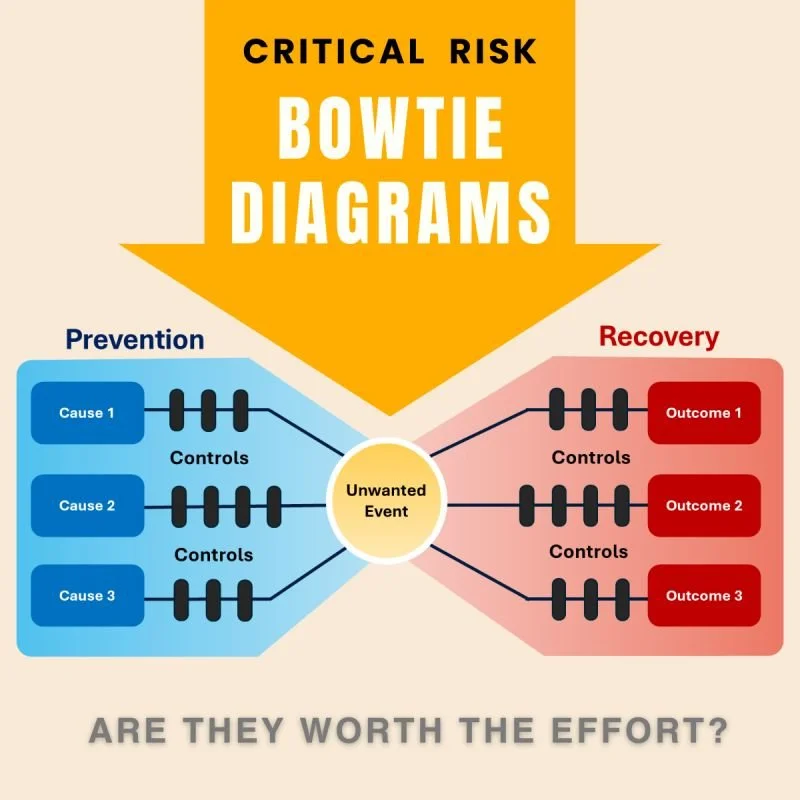
I have facilitated dozens of bowtie risk sessions over the past 5 years as part of safety critical risk management programs, and my conclusion: they need to be dynamic or they die.
What do I mean by using a bowtie dynamically? I mean they are used week to week (or month to month) by the business (i.e. they don’t just sit on a shelf). Here's a few examples:
🔸If a site has an incident involving a critical risk, they review the causal pathway and assess the control against the bowtie and determine whether the control had failed, not been used or not maintained.
🔸Specific critical risk bowties, which are relevant at the time, are presented to the Board as part of their due diligence program, so they better understand the importance of the controls to the overall effectiveness of the critical risk management system, to prevent serious injuries or fatalities.
🔸Bowtie diagrams are regularly (six monthly or annually) reviewed by risk and/or critical control champions and subject matter experts, to keep them up to date and front of mind for those involved.
After its initial use in developing and determining the critical controls to manage a critical risk, the bowtie diagram is primarily a communication tool. It is useful to provide an overview of how a particular risk is managed - whether that is for the the Board, ELT, a Risk Champion, a manager, Subject Matter Expert or a health and safety advisor.
When used effectively safety critical risk bowtie diagrams get people talking about the controls we have, or should have, in place to prevent or mitigate the most serious injuries and/or fatalities. If they deliver on that, in my mind, they have served a valuable purpose that has justified the time and effort to develop it in the first place.
If you need any assistance in developing, updating or reviewing your critical risk management program or just need a facilitator to assist in the developing your initial bowtie, drop me a message.